


Struggling with EPR, Plastic Tax and Packaging Compliance? You’re not alone.
EPR compliance, plastic taxes and new packaging regulations are evolving at high speed – creating major risks for manufacturers, importers and distributors. Companies today face the same critical challenges:
- Scattered packaging data and missing data quality:
“Our packaging data lives in ERP, Excel spreadsheets and supplier files. Nobody trusts the numbers we report for EPR compliance.“ - Manual EPR and plastic tax reporting
“We create country-specific reports in Excel. It costs time, causes errors and becomes stressful before regulatory deadlines.” - Complex regulatories
”EPR laws change faster than we can implement. Keeping up across multiple countries feels impossible.“ - Lacking transparence of packaging compliance costs
“We only see EPR and plastic levy costs after filing. We can’t forecast, simulate or reduce fees.“ - Disconnected compliance tools and ERP silos
“Our compliance system don’t integrate with SAP. Reporting is manual, fragmented and audit-unsafe.“
It's time to change!
With SAP Responsible Design and Production (RDP), companies can centralize product and packaging compliance, automate EPR reporting, enable plastic tax calculations, and gain full transparency across global packaging regulations, all directly integrated with SAP.
What is SAP RDP about?
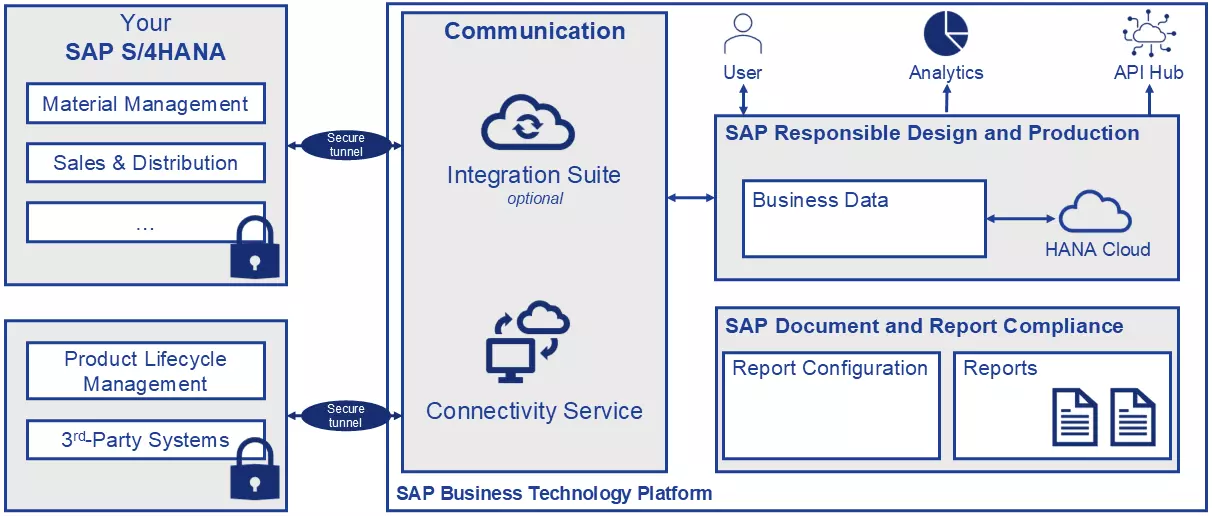
SAP Responsible Design and Production is a new cloud solution that enables manufacturers and brands to centrally manage product and packaging data, accurately calculate Extended Producer Responsibilty (EPR) fees and plastic taxes, and optimize packaging materials and designs toward a circular economy. RDP consolidates data from SAP systems and third-party sources, monitors global reporting obligations, and delivers reliable reports – helping you reduce costs, minimize risks, and fulfill sustainability commitments.
RDP leverages core master data and logic from your SAP ERP or S/4HANA environment, consolidates complex product and packaging structures in a single hub, and supports specific analytics as well as country-specific tax and EPR reports (e.g. UK & Spain). This creates a reliable data foundation for design decisions and regulatory-compliant reporting.
Which regulations can SAP RDP support for reporting?
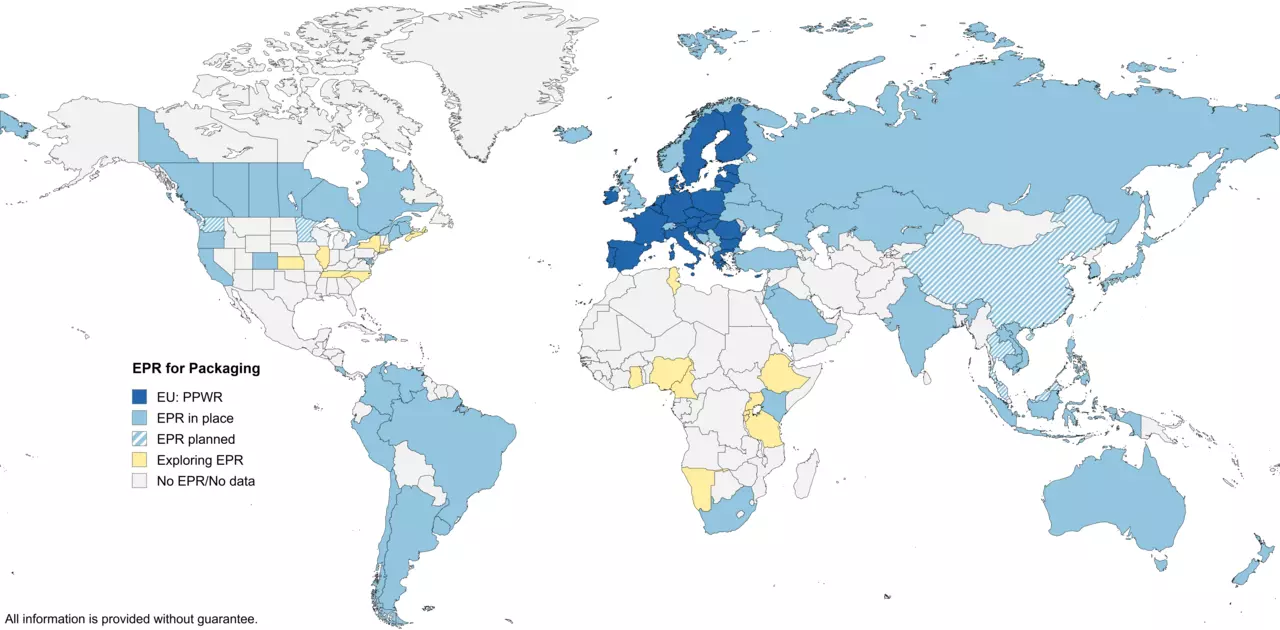
Additional global and upcoming laws and directives can also be mapped beyond those listed below:
- EU Waste Management Law 2008/98/EC:
General framework for waste management and EPR.- Extended by: (EU) No 1357/2014, (EU) 2015/1127, (EU) 2017/997, (EU) 2018/851, (EU) 2023/1542;
- Implemented by: (EU) 2019/1004, (EU) 2019/1597, (EU) 2019/2000, (EU) 2021/19.
- Packaging and Packaging Waste Directive (PPWD) 94/62/EC:
Regulates packaging, packaging waste, recycling targets, and materials fractions.
Valid until 11 August 2026.- Extended by: (EC) No 1882/2003, 2004/12/EC, 2006/20/EC, (EC) No 219/2009, 2013/2/EU, (EU) 2015/720, (EU) 2018/852;
- Implemented by: 2005/270/EC, (EU) 2018/896, (EU) 2019/665;
- Replaced from 11 August 2026 by: (EU) 2025/40.
- Packaging and Packaging Waste Regulation (PPWR) (EU) 2025/40:
Revised PPWD with significantly stricter recycling targets by 2030, e.g., mandatory use of recycled packaging- Effective from 12 Augst 2026 , replacing 94/62/EC.
- Effective from 12 Augst 2026 , replacing 94/62/EC.
- Plastic Tax (EU, Euratom) 2020/2053:
- Implemented individually (e.g. United Kingdom, Spain,…)
CENTRAL SAP EHS AREAS OF SI PRO
Your Benefits with SAP RDP
- Compliance without complexity
Automated calculation of EPR fees and plastic taxes, monitoring of global regulations, and ready-to-use country-specific reports – audit-proof and fully traceable. - Centralized product & packaging data
Maintain and analyze complex packaging structures, material variants, and quantities in a single hub – including data import from SAP and third-party systems, automatically via API or manually via Excel. - Cost savings through smarter material choices
Transparent impact of fee and taxes per material/design helps to identify alternatives and actively reduce EPR fees. - Faster adaption to regulatory changes
Global scalability reduces riks and effort – regulatory updates flow directly into calculations and reports. - Design for Circularity
See early in development how packaging decisions impact waste, recyclability, and fees – enabling circular product design. - Seamless integration into the SAP ecosystem
Uses existing ERP data and logic; ideal in combination with other SAP solutions for development and sustainability. As a BTP side-by-side extension, RDP follows the clean-core principle. - Audit ready, reliable reports
From EPR filings to plastic tax evidence: RDP provides structured, verifiable outputs per market. - Continuous updates and support from SAP
RDP is continuously maintained and updated to reflect new legal requirements. Customers can actively help to shape the future of RDP via the Customer Influence Program.
Typical Project Requirements and SI PRO Consulting & Implementation Services:
- RDP Fit/Gap & Roadmap – Analysis of product & packaging processes, EPR/plastic tax obligations, target vision and implementation roadmap.
- Data-Readiness-Check – Review of master data (materials, weights, customer data, etc.), definition of data quality rules.
- Blueprint & Solution Design – RDP data model, country configuration, roles, authorization concepts.
- System Setup & Customizing – RDP baseline configuration, organizational units, units/material classes, fee calculation logic.
- Integration with SAP S/4HANA & Third-Party System– Interfaces via push or pull API, PLM/EHS integration of packaging data, connection to (non-SAP) systems.
- Packaging & Material Assignment – Modeling of complex packaging hierarchies, components, reusable/single-use, recycled content
- Automated Calculations – Configuration of fee and tax calculations, market mapping, exemptions, simulations, SD pricing integration.
- Reporting & Report Filings – Design of EPR/plastic tax reports, country templates, audit trails, submission processes – also beyond SAP standard delivery.
- Governance & Operating Model – Data ownership, regulatory update processes, change & release management.
- Training & Enablement – Role-based training (key users, business, IT), work instructions, quick reference guides.
- Test Management & Quality Assurance – Test strategy, test cases (functional/technical), automated data quality and calculation checks.
- Hypercare & Support – Post-go-live support, monitoring of submission cycles, incident and enhancement handling.
- Security & Authorization – Role concepts, audit compliance.
Frequently Asked Questions (FAQs)
What is SAP Responsible Design and Production (SAP RDP)?
SAP RDP is a cloud solution for centrally managing product and packaging data while automatically calculating Extended Producer Responsibility (EPR) obligations and plastic taxes. It connects SAP ERP/S/4HANA data with packaging structures and delivers compliant, audit-ready regulatory reports.
What problems does SAP RDP solve?
Companies use RDP to:
- eliminate data chaos around packaging and material data
- replace manual, error-prone Excel reporting
- automatically comply with international EPR requirements
- gain transparency on EPR and plastic tax costs
- generate audit-proof reports
- integrate compliance processes directly into SAP S/4HANA
Which laws and regulations does SAP RDP support?
RDP delivers reporting for, among others:
- Packaging and Packaging Waste Directive (PPWD) 94/62/EC (until 11 Aug 2026)
- Packaging and Packaging Waste Regulation (PPWR) (EU) 2025/40 (from 12 Aug 2026)
- Plastic Tax (EU, Euratom) 2020/2053
- UK Plastic Packaging Tax
- Spanish Plastic Tax
- Additional countries and future regulations can be supported via custom reporting.
How does SAP RDP support EPR reporting?
RDP automatically calculates:
- EPR fees
- country-specific tariffs and obligations
- recycling rates and material fractions
- market-specific EPR declarations
It also generates submission-ready reporting files with full audit trail.
How does SAP RDP work technically?
- leverages master data and logic from SAP ERP / SAP S/4HANA
- operates side-by-side on SAP BTP (clean-core compliant)
- supports data integration via APIs or Excel uploads
- central modeling of packaging hierarchies
- provides simulation capabilities (materials, costs, taxes)
What are the key benefits of SAP RDP?
- automated EPR and plastic tax calculations
- centralized product and packaging data
- continuous updates to global regulatory changes
- simulation of material and design alternatives
- seamless integration with SAP modules (SD, CO, FI, PLM, EHS)
- audit-ready and fully traceable reporting
- fewer manual processes and fewer errors
What is the EU Plastic Tax and how does SAP RDP support it?
The EU Plastic Tax applies to non-recycled plastic packaging and is charged at the national level.
RDP calculates:
- taxable quantities
- recycling content
- applicable exemptions
- relevant material fractions
and generates the corresponding tax reports.
Can SAP RDP support sustainable product development?
Yes, through its Design for Circularity capabilities.
RDP provides early insights into:
- waste impact
- recyclability
- material cost effects
- EPR and tax implications
This enables more sustainable product and packaging decisions.
When is SAP RDP the right choice?
RDP is ideal if your company:
- places large volumes of packaging on the market
- reports EPR obligations in multiple countries
- uses materials subject to plastic taxes
- struggles with data chaos or manual Excel processes
- needs transparency on cost and environmental impact
- aims to design more sustainably and achieve circularity goals

News and Events
Why you should choose
SI PRO

SI PRO has been advising on SAP solutions since the earliest versions were released, and offers the most comprehensive level of best practice know-how.
Our consultants are familiar with specific issues, business processes, the latest SAP solutions, technologies, and appropriate procedures.
We can support you throughout your project’s entire life cycle, from analyzing your requirements to project planning, implementation, and maintenance.
Business Contact Partner
Michael Hintenlang
Tel. +4962130982615
E-Mail
